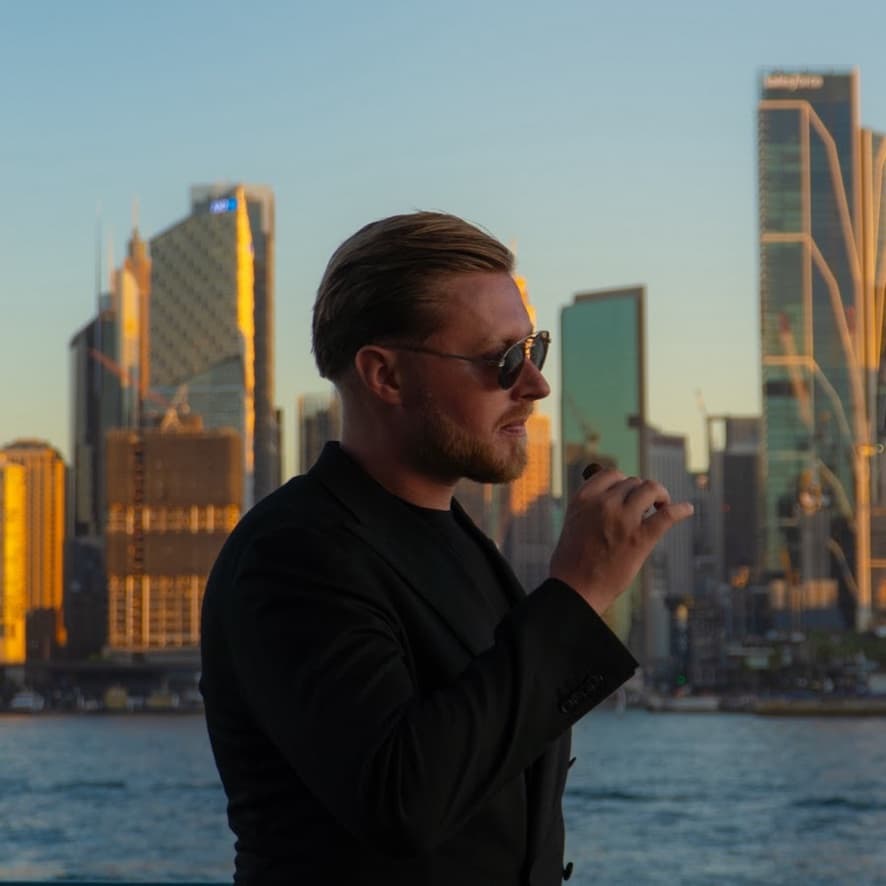
How I achieved complete life freedom
As of 1 December 2025 I have a usable level of location freedom, financial freedom, and time freedom. This is the mistakes, the numbers, and what I would not do again.
Start with location. I had it first, at 21, long before the money. Most people wait for financial freedom and hope the rest arrives. That is backwards. I used location arbitrage to get the money.
Location freedom is the ability to move
Location freedom is the ability to change where you live to a place that serves the current goal. It is not mandatory travel. I have been to 70 countries, closer to 80. Years with 20–25 countries were too much.
The year now splits into about three blocks of four months. Last year: a summer road trip in Europe with friends, two months in Italy, then Dubai, Tokyo, Kazakhstan, and the rest of the time in Southeast Asia. That is a setup that works for me, not a rule.
If your passport is weak, multiple residencies and passports sit higher on the list. Two friends with Ukrainian passports have that problem. Andrew Henderson at Nomad Capitalist has a line I keep: go where you are treated best — tax, law, welcome, or a government that actually wants founders.
Van life, then Georgia at $1,200 a month
I first got location freedom from a camper van. I was stuck in recruitment. I built the van on weekends for about a year. I did not have much money. I did road trips around Europe and the UK. It was a happy stretch. I still thought about money the whole time, so I did not enjoy the freedom as much as I should have.
Then about two years of travel, then Georgia. A developer I worked with was Georgian. I was building a software company. I went for four weeks. It became four years. That was about seven years ago. Georgia has changed. I am not telling you to move there.
The accident was the cost. I grew up in London. A life I would actually want there was about £10,000 a month then, call it $15,000, and would be more like £15–20,000 a month now. In Georgia I spent $1,200–$1,500 a month without living cheap: a good apartment, eating out, a meal-prep service I later invested in, the best gym, taxis, a coworking desk. Tbilisi is small. There is not much entertainment, which meant not much distraction. Foreign income was 0% tax. Cheap labour. If I had arrived with $10,000 and earned nothing else, I had about eight months of runway.
Getting rich is earn more than you spend. Drop the spend and the surplus is obvious. I put it into more developers, into assets, into the S&P 500 and Bitcoin. Not meme coins.
Other cheap bases, then I became a slave to Social Boost
Kazakhstan felt close to what Georgia used to be. Armenia is on the list. Thailand is popular; I find it trashy. Bali, Vietnam, Cambodia, Malaysia. I like Malaysia. I was there a couple of weeks before I recorded this. Asia feels like it is rising — full restaurants, busy malls. London high streets have empty units.
After Georgia I opened Social Boost. For a year it was the fastest-growing company in the country. 120 people in a year, about 150 at the peak. That company bought financial freedom. The price was location and time. I was a slave to something I had built. Do not sell those two if you can avoid it. A job for survival is a losing trade. I have done that trade.
Build on the 9–5. Do not buy a house that pins you
At 18 I swept a factory floor and tried to get a carpentry apprenticeship. Then three years in recruitment, 8:30 to 6:00. After 6 I stayed until 2 or 3 a.m. selling to US clients. I slept in the van in the office car park and showered at Nuffield Health in Leatherhead. I did not quit the job to start the company. I ran both.
I am now wary of anything that makes leaving a city expensive. A relationship that would not leave Georgia. A property I bought there, spent years doing up, never finished, sold, and only then noticed I did not want to be in Georgia. I own no property. Every villa is rented. I pay one fee. Five full-time staff cook, clean, do the garden and the pool. Someone cuts a coconut in the morning. I do not hire them, pay them, or replace them. My job is to use the house.
A bad location is a $300–$500 flight
It has never been easier. I did van life with little money. I moved to Georgia with less than $100,000. I would not have called myself rich. People wait for the stars. The reverse is a flight home.
I left the UK at 21, nine years before this recording. I still have the passport. A new government, a legal change, I can go back. That is what reversible means.
Financial freedom is surplus plus about $1 million liquid
On the basic level you earn more than you spend every month, ideally passively. A friend called the period before that the rat race. Get out of it.
Then I want about a million dollars in liquid assets: something I can turn into cash in 24 hours. Bitcoin. Stocks, if the broker actually pays out that fast. Not a house.
The cash-flow businesses I still think work at $10k, $50k, $100k a month: automation agencies — I was making those videos six or seven years before n8n got loud — and
OnlyFans if that is your thing. Other videos on this channel cover the how.
The first million is anticlimactic. I was in Dubai, on a shisha, adding a bank account to crypto wallets to another bank. It came to about $1.1 million. No fireworks. $750k and $1 million are the same month. The freedom it buys is not.
Money buys a better life. Happiness is a skill
Money buys a much better quality of life. If you have internal problems you can now pay a good therapist. I do not think you find fulfilment in objects. A car, a trip, a purchase is dopamine. It expires.
Happiness is a skill you practice. Health, the people you care about, weather, nature — money does not run those. I used to think it would. The world moves. Your job is to adapt to it, not the other way around. You are less important than you think. I spent a long time killing that ego.
One of the happiest stretches of my life was at 18. Almost no money. I was obsessed with the law of attraction and with keeping negativity out of the room, including people moaning about weather. That was a muscle. Control the state, not the bank balance.
CEO, lifestyle creep, and the 80/20 split
Selling time or location — or both — to get money is a bad trade. I made it at Social Boost. People who have never run a company think the founder chooses the hours. If you are the only employee, you do not. You work all of them until there are systems and other people.
I have been CEO of fast startups, not a ten-year firm. One went to about 150 people in 18 months, 70 in the first three months. That three-month jump was a mistake. There were no processes yet. Scaling laws go in threes: 1, 3, 9, 27, 81. Each jump is a new class of problem. I had managed about ten people. My co-founder had managed about five.
The CEO job at 100+ people is the problems nobody else can close. You solve it, you teach a system so it stops arriving, or you hire. You are not barking orders. You are the inbox for issues.
Financial freedom does not hand you the other two. Bank CEOs and footballers have money. They do not have location or time. I retired about 18 months before this video, under 30. Too much empty time is also a problem. Keep pursuing something.
At 24 or 25 I had hundreds of people and about $600k in revenue, not profit. I could not work out why I was not happy. I only saw it when I sold. The relief was not the lump sum. It was the weight coming off — time and location back.
Watch expenses as income rises. $5k a month to $20k with $20k of spend is the same trap with a nicer sofa. It is hard to go down a class once you have sat in first. Delay the upgrade. Do not buy things to show the money until you are actually free. Then buy some nice-to-haves if you want.
The split I use is Pareto: invest 80%, live on 20%. $10k in, live on $2k, invest $8k. $20k in, live on $4k. $100k in, live on $20k, put $80k to work. That is how the number moves fast.
Time freedom is saying no, then owning almost nothing
Time freedom is control of your hours without selling them, and without commitments you do not want. People. Promises. Clients. Property. Everything you own ends up owning you. This camera is about $5,000. I have to not lose it, charge it, and carry it because I travel. One object is small. Hundreds are not.
I keep every possession in Airtable. I am already minimal and I still have about 300–400 things if you count cables and clothes. Designer linen that only one dry cleaner will not shrink. Each item is a tiny job.
On the company side I now care about revenue per employee, not headcount. A bloated team with weak revenue per head is a badly run company. I have had that company.
I had location and money for years without time, because the commitments had stacked. Staff in this villa still need managing. I also want the house empty. Privacy is part of it.
The default is no. A wedding I do not want. Random Telegram and

Time freedom is the one that made me happiest. You need the money first. Location you can start without it. Using cities for what they are good at is still the biggest life hack I have.
A day at 30
I turned 30 in August, three months before I recorded this. This is the most fulfilled I have been.
Mornings are about four hours of building — small apps, scripts, agents, my own problems — with no plan to sell them, or a walk and a call with ChatGPT or an agent. The Reddit trend finder. A scrape of an entire social platform, then trends in what that user base posts. If the interest dies I stop. I do not owe the project a business.
Gemini 3 landed about ten days before this. ChatGPT 5.1,
Codex and Codex Max the next day.
Claude Opus 4.5 about ten days after that. Other people say keeping up is a full-time job. I made it one.
Every day I play padel with friends for an hour and a half, then we sit and talk — investing, the world, whatever. I used to isolate. I do not now. Afternoons I walk, an audiobook or a podcast. Evenings, dinner. Success did not give me a money filter. It put me around people with the same problems, which is a better conversation than the average one.
If you are in the same stretch, or you are doing social-arbitrage investing, I am interested. Questions in the comments; I may do a Q&A. Eight years ago this life was a different universe.
Email newsletter on Newsletter.
Transcript
Hey guys, hope you're well. Um, today we're doing a video on how to achieve complete life freedom. Um, this is going to be a kind of documentation of a lot of the mistakes that I've made, lessons that I learned, um, and things that I would do differently, things that worked out very well for me in building a life of location freedom, financial freedom, time freedom, commitment freedom, and kind of all of the the mistakes that I've um I've made made along the way. But I have finally achieved a very good level in all three of those areas of my life after quite a lot of work.
I'm sure in a year's time I'll be recording another video on this with a load of other improvements and learning. Um but as of today, the 1st of December 2025, uh this is everything that I I've learned uh on my journey of uh achieving my my dream life. Um we'll start off with with location freedom uh as it's actually the one that I would suggest all of you to to focus on to start with and it's the one that I actually achieved first. So what does location freedom mean? The ability to change your location easily to a location that best serves your current goals.
It may mean that you want to be able to go traveling all of the time. It may mean that you just want to be able to choose where where you you live. Um, I've done both of them. I've traveled to 70, maybe closer to 80 now countries. Uh, I've lived in a load of different countries as well. Personally, I don't actually like traveling all of the time. You know, there's been years where I've gone to like 20 25 different countries in a year and it's just too much. My current life setup is I will generally split my year into four different months.
So there's um three different periods and I will spend that living in in different locations. So like for example last year I spent the summer in Europe doing a road trip with my friends and then I spent about two months in in Italy. Uh the rest of the time I spent between Dubai. I traveled to Tokyo also to Kazakhstan. Uh and then the rest of the time was spent in Southeast um Asia. So again all of this is kind of like adaptable to you. Uh I'm not telling you that this is the way you have to do it. Uh this is just the life setup that I I've currently done and what works for me.
So some key words that like you may think of um that fall in like the location freedom bucket. Travel, multiple bases, digital nomad, location arbitrage, multiple passports, uh as that will definitely be a thing for you if you're not quite as as lucky to have a passport that allows um freedom of movement. Um, and I have two two friends of mine that have that that issue with with a Ukrainian passport. Um, then the acquisition of multiple passports and multiple residencies is something that um maybe like higher up your kind of list of priorities. So, uh, I achieved location freedom far before financial freedom.
I actually first had location freedom uh when I I was about 21. Uh most people would look to focus on financial freedom first and they think that you need to achieve financial freedom before you have location freedom. But I would actually argue with this point my life is just evidence that that's not actually the case. And what I would suggest you to do is use location arbitrage to help you achieve financial freedom, which is exactly what what I did. And then there's a great phrase uh from Andrew Henderson uh from from Nomad Capitalist.
I can't say I agree with everything that he comes out with, but I just think this phrase is so clever, so simple, so elegant, which is go where you are treated best. So that can mean go where you're treated best financially, legally, where you're perhaps most welcomed. It could be where you're most appreciated. Um that could be as an entrepreneur a place that offers perhaps grants and governments are really willing to work with you and invest in in startups that that choose to move there.
Uh it could mean for example with women uh a lot of people choose to do this um uh like going to countries such as Colombia um or or Thailand where a kind of western man is generally like higher valued whether it's because of money or because of other things. Uh, I can tell you being with a 10 out of 10, whether it's from money or for other things, it doesn't really make much of a difference. Um, as long as you're not like paying for it, if they like you because you are successful, uh, it's not really a thought that um that that that crosses your mind. But anyway, that's another another subject entirely.
Um, so the way, in fact, sorry, one thing that I've missed here is, um, I first achieved my location freedom from van life. Um, so I can't remember if I've said about this before, but I my original goal was when I was in stuck in recruitment was to go traveling and I decided to to build this camper van. I'll see if I can find some photos of it. The project took me about a year. I would work on it on my um on on the weekends basically and I didn't have much money, but I I did multiple road trips around Europe in this. also a big road trip around around the UK.
And that was in all honesty a really happy uh stage of of my life. But I didn't have financial freedom. So the whole time that I was driving around Europe, I was often thinking about money, about business, about how to how to achieve financial freedom, which didn't really allow me to um at least at the time to kind of appreciate and enjoy the uh the the level of freedom that I have.
But the reason that I mentioned that is because again location I was able to travel to live where um to like drive wherever I wanted to at least at that point and I wasn't tied down to one particular um location and after that I then continued to to go traveling for about 2 years and ended up moving to to Georgia. Again let me just reclarify this isn't me saying that you need to move to Georgia.
Um this is just me talking about what worked for me and bearing in mind when I did this it was about seven years ago and Georgia has really really changed quite a lot um over those years both in in positive and in in negative ways. So the reason that I moved to Georgia is because one of my developers was Georgian and I was building a software company at the time. So originally I went out there to go and work with him for like four weeks. four weeks ended up turning in into four years um for a num a number of different factors. But some of the biggest benefits of me moving to Georgia were it minimized my expenses.
This wasn't actually my reason for doing it, but it it was definitely like a massive benefit especially um this is especially powerful if you're moving from an expensive country. So, I had grown up in London and to live a good life in London, you know, back then it would probably have been about 10,000 pounds per month, which is about maybe 15k USD, whereas now it would probably be more like 15 to 20k GBP per month, uh, for me to live the the quality of life that that I I would look for.
And at that time I just I mean I was spending that money but for me to move to Georgia where my monthly expenses would have dropped down to about $1,200 to maybe a $1,500 per month. Um and bearing in mind that's not me like trying to live a cheap life. There wasn't any feeling of um a reduction in in my quality of life. I took an apartment in one of the best locations in Georgia. Uh, I would eat out all the time and then I actually had like meal prep. Um, I had a meal prep service where they would deliver all of my meals to me. I actually ended up investing in that business.
And a number of years later, um, I would I was a member of the best gym. I was taking taxis everywhere. But basically, Georgia was just so cheap at the time that my expenses were really low whilst maintaining a really nice quality of life. Um, working out of of a co-working space. I also gained access to cheap labor. Another thing to mention about Georgia is it's Tbilisi is quite a small city. There's not very much in the way of entertainment, which meant there's not very much in the way of distraction.
So, it was actually a really good place to work from because there was kind of nothing to do uh except for for work. Um 0% tax on foreign income. It allowed a lot more breathing space um for my because I just reduced my expenses. Even if I went there with like $10,000, I would have been a even if I didn't earn another dollar, uh I would have been able to live there for about eight months or so without without needing to earn any more money. So, you just kind of allowed yourself a lot more um breathing space and again no feeling of like lowering or sacrifice in terms of my my quality of life.
Um and just if we think about like getting make getting rich as well the process of getting rich literally on its most basic level is you need to earn more money than you spend every month. Right? It sounds very very obvious to say. So one of the best ways to do that is if you can reduce the amount of money that you need to earn every month in order to be profitable in order to have a surplus of money. One of the best ways to do that is by changing locations. And then by changing locations, you now have a surplus of money that you can invest into your business, which is exactly what I did.
We hired more developers. Uh with the extra money I had available, you could make investments, ideally smart investments, not into meme coins, we I won't go into it now, but into building up uh assets that are earning money for you whilst you whilst you sleep. um or you know the S&P 500 or I'm also a fan of of Bitcoin as well. But whatever avenue you you choose, you want to be investing that extra money to be to be um working for you. So as I mentioned like Georgia has also changed quite a lot since I lived there and it wouldn't be my number one choice.
Um, last year I visited Kazakhstan, which I felt offered a lot of the similar benefits that Georgia has that that that I've just mentioned. Potentially Armenia as well. Thailand is a very popular choice for a lot of people, although I'm personally not a fan. Um, just because of the uh I just I just find it to be a bit like trashy, I think, would be the way to describe it. Not not particularly classy. And so just for for those reasons I I don't really really like it. Bali, Vietnam, Cambodia, Southeast Asia in general and and um Malaysia also being a part of Southeast Asia. Malaysia I do really like.
Uh I think would be a really good option as well actually. Um but again, it's not me to tell you what to do. They're just some places that would be like on my to explore list um of countries that offer this type of arbitrage with reduced expenses and with um without the feeling of like a reduced quality of life. If anything, I feel that you have a much better quality of life. Uh I I'm actually a really big fan of Malaysia. I was just there a couple of weeks ago and I spent quite quite a bit of time out there now. Um, Asia to me feels really like it's on the rise. Like the middle class is really on the rise.
It's kind of vibrant. It's kind of buzzing with life. Restaurants are full. Shopping malls are busy. There's no kind of empty shops and so on. The people are spending money and and you can really feel it. Whereas in Europe, it doesn't, at least to me, it doesn't feel that way at all.
particularly in in London if I kind of go back there now on like major shopping high streets there's like empty shops um that are like available to rent and you you don't see that in these in these other countries in in Singapore in Malaysia in in a lot of these countries I've kind of mentioned here um and then like one other thing to mention as well is uh something that I think is quite interesting is I realized when doing this that I've I've been through stages of having location freedom then not having it and you you kind of make different sacrifices.
So um again like I mentioned I achieved location freedom originally from van life and then after moving to Georgia I opened a company called social boost. It was one of the fastest growing sorry it was actually for a year the fastest growing company in Georgia that grew to 120 employees in a year and then its peak it was at about 150. Um, but by opening this company, I basically became a slave to my own creation. I unlocked financial freedom through this company, but the price that I paid for it was my location freedom and my time freedom. I was a slave to this business.
Do not sell your time or location freedom if you can avoid it. Um, if you kind of are in a position where like you need to have a job for survival, okay, just understand you're kind of in a losing trade. uh at least from my side. And look, I've been there before as well. I've I've had multiple not even nine toive jobs. I worked in a factory sweeping the floor. Um and I was going to I I was trying to learn carpentry to be an apprentice. This was back when I was 18. And then I went into recruitment and I did that for three years. Um so I have traded my time for money before.
But what you want to do and what I did was I worked uh in recruitment from uh 8 8:30 a.m. till about till 6:00 p.m. was our our finishing time. And then from 6:00 p.m. till 2:00 in the morning. I mentioned I had this camper van. I would sleep in the off in the car park of the office. So I would stay in the office from 6:00 p.m. till about 2 or 3:00 a.m. in the morning cuz I was selling to USA based clients. So I would work US hours, sleep in the van, shower in the gym.
There was a Nuffield Health in Leatherhead uh that that it's a UK based gym franchise that I would shower at, sleep in the camper van, wake up the next morning and and do the same thing. And I just built my way out of this this 9 to5. I didn't leave my 9 to5 job in order to build this company. I just did them both at the same time. Uh there there was a lot a lot of sacrifice. I was working all hours of the day, but um but it it did it did work.
Um, then as well as you kind of get more advanced into it, like now I'm kind of very wary of like opening businesses or making commitments that are going to tie me down to one location or cause a lot of friction in terms of moving location. Like for example, a relationship that I had before uh was with a girl who just wasn't really willing to move outside of Georgia. Uh, I also bought property in Georgia, which I actually did quite well on financially, but I invested a lot of time into doing up this property into the style that I wanted it to be in and it it took a number of years. I never actually finished it.
Um, I ended up selling the property, but the amount of effort that I put into this property and then I actually realized when it was close to like a finishing point, I actually realized actually I don't want to be in Georgia anymore. It was a real kind of time sink. So now I'm really careful uh and I I don't I don't own any property by the way. Every every villa that you see me in is rented. And I really enjoy the freedom that that renting provides you without the commitment. My only responsibility of being here of renting this villa is to enjoy this property. I pay one fee.
They handle cleaning the pool, all of the gardening. There's a guy who will come around and cut down a coconut every morning. There's five full-time staff uh that clean and they'll cook food for you and do whatever. But I'm not involved in any of the management of paying their salaries, of hiring them if someone leaves, of all of like the little nitty-gritty details that come with managing a villa that mean that you end up not enjoying it. I just pay pay a fee, come here and enjoy the property. And it's a much it's a very minimal um and much cleaner way of living.
And we'll go more into that in the uh time freedom uh side of things. Um, the other thing to mention is it's never been easier to have location freedom. And I think people just don't don't really um appreciate this. Uh, it's a lot easier than than you think. When I first had location freedom in van life, I I didn't have a lot of money. And even when I moved to Georgia, like relatively, I mean, I I was okay, but I I I didn't have financial freedom. I I wouldn't consider myself to have been rich. Um, I had less than 100k definitely when I first moved there.
Um, and then I but by moving to Georgia, it made it far easier to actually build my wealth. Um, being out there and again, I was investing in into into my my software business as well. So, it's never been easier to have location freedom. Many people are looking for too much stability and for the stars to align before changing location. and you can just do it right. You the the with a lot of decisions, the thought process I like to go through is how easy is it for me to reverse this decision? If I'm wrong, how committed am I to this decision? How much is it going to cost me to to go back?
And with this, it's going to cost you a flight back home. It's going to be $500 or $300. The worst case scenario is that you go somewhere, you decide that you don't like it. this isn't for me and you can catch a flight back home and continue w with with your old life but at least you've had like the new experience at least you actually tried to do it. So don't feel that everything needs to be perfect. Like with all of these things that I I talk about in my life, with changing countries, with van life, with all this like other stuff.
I was worried like financially, I was worried about all this other stuff, but I kind of just jumped in the deep end. With Georgia, the exactly the same thing. Um I I kind of had no idea what I was doing, but just you decide to take a flight there and you figure everything out whilst you're there and everything works out okay in the end. So I'd really encourage like all of you to to do that. be be more risk of u willing to take risks not not the point of like stupid risks that like completely can completely backfire.
Um but in reality if you actually analyze the amount of risks that that you're going to be taking with like choosing to move countries um the upside that I've mentioned with all the benefits that I've mentioned of massively reducing expenses a lot more freedom a lot less stress there's huge upside and really quite quite minimal downside. It may be scary like the first time that you do it, but really it's um it's it's not not a big risk to be taking and it uh it has tremendous upside.
Um, and that's also something else to mention by the way with like, you know, I left the UK uh, so yeah, when I was 21, so nine years ago now. And I mean, looking at what's going on there, it's not very appealing to go back. But in actual fact, I am quite like patriotic. And I do like the feeling that, you know, in 10 years time, I I could always choose to go back there if ever I wanted to. If you're leaving your country, it's not like you're cutting ties with it altogether. You still have a passport, right? you're not fleeing the country and kind of on the run at any point that you choose to.
Um, you know, if the legal situation changes or there's some things that happen that you like, you know, a new government, whatever the case may be, um, you can always kind of choose to to go back there. So, it's a very easy decision to reverse. Uh, next, let's go on to financial freedom. So, just again, these are kind of like definitions I've kind of come up with, but feel free to adjust them for you, but it's just to give you like context of what I'm talking about.
So, first off, to be financially free on the most basic level, um you need to earn more money than you spend every single month, ideally passively, um in order to achieve the the time freedom. Um, but there was a concept that was um, explained to me by a friend of mine called the rat race, which basically meant until you're at a period where you are earning more money uh, passively than than you spend every single month, you are in the rat race the same as everyone else. So, you want to kind of get out of there as quickly as possible.
And then the next thing is I think ideally you want about a million dollars in in liquid assets. Uh, and so what I mean by liquid is where you you would be able to if needed to turn that asset into cash within 24 hours or or less. So property wouldn't fall under that, but things like Bitcoin, stocks potentially depending on on your broker if you could could transfer that money out very quickly.
Um, but you want liquid assets, things that are like easily accessible to turn into cash of about of I think on the lower end of about a million dollars um is like a nice number to be at to really feel quite quite comfortable. uh other things that like kind of terminologies that I would think about in this department investing index funds fire which means financial independence retire early minimizing expenses retirement uh revenue per per employee uh is is one that I really like to look at as well.
So optimizing revenue per employee for keeping a very small, very lean business that has um insane uh amounts of of revenue per per employee is something that I think of as being quite interesting uh at the moment. For financial freedom, most people are purely focused on financial freedom and and they're stuck here. Most people never actually achieve financial freedom. Um, for more specifics around like my thoughts on kind of earning money, um, which of course is like a very important part of financial freedom, you can look at a lot of the other videos that have been spoken about on this channel.
Um, some interest really interesting like cash flow businesses. Um, at the moment automation agencies, particularly with AI, you know, I've been doing recording videos on this for about the past six or seven years before like n8n and things became like very very popular. Uh, a lot of those videos are like just as relevant as as they are today. Uh, but there's also a ton of content on like n8n and things like that. But again, I I I said about these opportunities years ago to people um of how good they are and uh and the other one of course that I spoke about a lot as well as a cash flow business is is Only Fans.
Um, if if that if that's your thing. Um, so yeah, go and watch some of the the other videos on that. But I I think that those two um two businesses are still really really good cash flow opportunities for bringing in 10, 50, 100k um per month. Uh a few kind of like lessons and just kind of things I'll share is like making your first million to be honest is kind of anticlimactic.
uh I spent years working on on achieving it um and getting there and uh and when it actually happened uh you the the funny thing is is like you kind of know that that it's going to happen, you know, once you're past maybe like 800k or you've got like a cash flow business doing like 100k per month, you know, it's just a matter of time until you get there. And uh it's not like you're kind of like counting down the amount of like in a bank account it goes from like 999K up to to a million.
I mean I I was in Dubai at the time I think smoking a shisha one evening and I just kind of added up oh if I add together this bank account with these crypto wallets and this other bank account it equals like 1.1 million and uh and nothing changes. No fireworks go off. Life kind of goes on. like there's really no difference between having like 750K in your bank account and having a million dollars in your bank account. It's it's an arbitrary um number. Um so yeah, making your first million is anticlimactic, but the freedom that it buys you isn't.
So just on that note as well, the question that people always like to ask is, does money bring Money buys you a better quality of life, a far far better quality of life. Um, happiness, I think, is something else. We'll go on to that in a second. So, you may have some internal issues, traumas that stop you from being happy or feeling fulfilled, but at least if you have that now, you can afford a good therapist. Um, I personally, again, this is my own experience, I don't think you will find happiness in the material or physical world. And money is a man-made idea, right?
Um, you will you will find moments of, you know, dopamine and endorphins. Uh, you know, whether it's buying a new car or acquiring something new or like going out and making memories, but these these things are kind of um temporary. They're they're ephemeral. Um, and I don't believe it's not true fulfillment. And I don't believe that you can actually find that from from external stimulation. If you're looking for something external, something outside of yourself to make to make you I don't think that it it will truly make you happy. I think happiness needs to come internally.
Uh I've actually come to the conclusion I think I mentioned it before that happiness is actually a skill. It's something to be practiced rather than a state or something that that can be acquired. Life regardless is up and it has its ups and downs. There are things that are out of your control whether you have money or not. be it your health, the health of the people that that you care about, things just go wrong. Um, mother nature is like more powerful than all of us. There are things that are like outside of your control, no matter how much money you have.
And uh, and it took me some time to realize this, by the way. Uh, I for whatever reason was under the illusion that by having money you would you would have control over all of these like minor like negative things in your life, but that that's that's re really really um, not not the case. Um there's a there's a great quote. I've actually forgotten it specifically now, but um it's like the job of of the world to progress and adapt um to to like move forward and it's the responsibility of gentlemen to adapt to the world.
So if you keep trying to like shape and adapt the world into like how you want it to be, you're going to find that it really maybe on a small thing a couple of small things you can influence that you have direct control over them. Most things are genuinely outside of of your control and uh you will find a lot more happiness by accepting that rather than trying to uh to to control um all of these different things. also by realizing that most likely you're a lot less important than you think you are. Again, that was also the the learning for me. Very much going through a process of um killing my ego.
Uh let's say also just onto the idea that happiness is is a skill. Um I can now say that I I'm at a again it sounds like kind of bragging or showing off. I'm a happy stage in my life. Let let me just put it like that. But one of the happiest times in my life was actually when I was um I was 18 and I was very obsessed with the law of attraction with positive thinking um and with like removing any negativity. So if if someone would even like moan about the weather, I would kind of like block out what they're saying or like tell them to like to not be negative around me.
And I was really um it was almost like a muscle of uh like building this muscle of like controlling your uh space around you, controlling your thoughts. And I had really like great awareness of um of all of my thoughts and just controlling um controlling things around me and controlling people being like negative around me. And that was a really great stage in my life. I didn't have money uh or very very minimal money but I was really really happy. And again it that is really what makes me think that that happiness is a skill by controlling your uh emotional state.
That is what needs to be worked on uh in order to achieve a true sense of of inner happiness. Um next we'll just go over some traps in financial freedom because there are quite a lot of them uh that we're taught as these things are kind of like normal or good things to do and they're not. Selling your time or location freedom or even worse both in order to achieve financial freedom in my opinion is a very bad trade-off. I've made this mistake before. I mentioned with Social Boost the company in Georgia, I ended up being a slave to my own creation.
And many of you who have started businesses will have experienced this exact same thing. Um, you know, people who haven't run a business before think that when when you start a business, you instantly get all your own your your freedom. You get to choose your own working hours. you're your own boss. Yeah, on some degree that is true. What you will realize is if you're the only employee there, your responsibility is to handle everything. You don't get to choose your own hours if you want to have any form of success.
You're going to be working all hours and you're going to be working all hours for a pretty substantial amount of time. um as you kind of learn and actually build up the the systems and processes and hopefully hire some employees to be able to handle responsibilities to um but the same thing applies even in in larger companies um in in fast growing companies. You know, I've never been the CEO of like a an established business of like five or 10 years. Um but I've been the CEO of like fast growing of my fast growing startups that grew to 150 employees within 18 months.
And because you're growing so quickly, you I mean even we grew to like 70 employees within the first three months. That was a mistake, by the way. Um because you just haven't had time to build out all of the processes and um and all of like the systems that are kind of required to sustain that growth to train people, the HR processes, just all of the the kind of different things that are really uh really needed. I mean, also just an admittance on my side is I had never managed a team of that size before. So I I was kind of figuring everything out on the job. The same with my co-founder of that company.
I think the biggest team he had managed was about five people. My biggest team would have been about 10. Uh and when you get to like um there's an idea of like uh scaling laws happen in threes. So as you go from um one employee to three employees to nine employees to 27 at each level, you keep unlocking uh a different set of problems. So, as your organization size multiplies in threes, you're going to encounter a new set of problems. And I found that to be be pretty uh true. Uh and then as you go from 27 up to 81, um again, you'll encounter another another set of problems uh as well.
Um and you need to like the CEO. People think, you know, it's kind of glamorized that people will put it in their IG of, oh, I'm the CEO of this twoman or even like a oneperson startup. And obviously, you're not. The reality of being a CEO, at least my experience of being the CEO of a business with 100 plus employees is basically all problems that no one else is able to solve get brought to you, right? And your job a as the CEO is to well one you either solve those problems yourself. You teach the the staff how to solve those problems.
Um so like kind of build a system so that those problems stop coming to you or you need to hire someone in order to sol solve those problems. They are kind of the three things that that you need to do. But it it's not a case of like you're barking orders down to people and telling everyone what to do. Like in some sense you do you are doing that but more on like a kind of strategy point of view and then you're having the your managers actually go and implement that for you but in reality you're just having problems brought all the issues are being brought up to you. All problems are being brought up to you.
So it's still a pretty um stressful position and kind of the complete opposite of what I think most people would um would assume it to be. The other thing is that I think most people think that by achieving financial freedom that all other freedoms come to you automatically, right? And in in a lot of like books and stuff um they kind of talk about oh like imagine you had this like dream life of your financially free um you know on a beach or like you're you're retired. By the way, I did retire about 18 months ago.
It's also not a good thing to do when when you're um under 30 or like it leads you down another path. Having too much time on your hands isn't a good thing either. You want to be pursuing things at all times. But that's another side tangent to um to to uh to kind of go on to. Um but yeah, the the assumption is that by achieving financial freedom that you automatically get location freedom and you automatically get time freedom. And the truth is most people who have financial freedom do not have the other two freedoms.
CEOs of banks of uh you know even a footballer for example you can look at them and think that they have this like great life earning these huge amounts of money. They are still tied down to one location. They do not have uh time freedom be a to be able to do whatever they want and they do not have location freedom.
in essence you are still a slave on on two metrics at least according to to my my philosophy and my my kind of uh t take on things um and again also what I mentioned about being being a slave to my own creation before with that company at the time I didn't realize it right it's only now I mean that was a number of years ago that I exited from from that that company but it's only with the benefit of hindsight that I actually realized how kind of stuck within that business I was because really I I even at the time I battled with myself thinking like Nathan you're like 24 25 years old you've got like hundreds of of employees working for you like you should be on top of the world like you're um by all measurements successful the company was doing about 600k in in revenue not not profit um and I was kind of battling with myself of like why am I not happy why am I not kind of appre appreciative of um of what I've achieved.
And it was the only time that I realized was when I actually sold the company. And again, I got another payday when selling that company. But that's not what I was happy with. I wasn't happy with this lump of money hitting my account. The biggest relief came from the weight off of my shoulders of being rid of that commitment to that business that finally I had regained my time freedom and my location freedom. uh and it was an amazing feeling far more so than than uh than h having the the a lump sum of money coming into my bank when when selling selling the business.
So, um yeah, uh a few other things to look out for in terms of financial freedom are increasing your expenses as you earn more income. This is one thing to really watch out for and it's a trap that everyone falls into. If you go from earning 5K a month to 20K per month, but your expenses increased to 20K per month, you're not actually in any, you know, your quality of life has gone up, but actually you haven't achieved any uh any like further level of financial freedom. So, be very careful of that. It's also very hard to go down in quality of life once you've gone up.
Once you've uh gone from economy to business class to first class, anything below that is now you you kind of get quite spoiled. And again, it's something I I battle myself with with as well because it shouldn't be that way. Um, but you basically delay increasing your quality of life as much as possible if you can. Don't buy things to to show off wealth. Instead, invest that money until you've at least achieved the definition of financial freedom. Invest that money and have that money working for you.
Once you've achieved financial freedom and you're no longer trading your time for money, then you can go and buy some things that are just kind of like nice to have. Um, and then one other rule that I've spoken about before is my um 80/20 rule. Not my rule, sorry, it's um Pareto's principle, but a rule that I like to have was um invest 80% of your income and the other 20% you can just go and go and enjoy it, go and spend it on on whatever you want. So, if you're earning 10K a month, don't be going crazy spending that 10K a month. You want to live on off of like 2K a month.
Like, reduce your expenses and live on a budget and invest that 8K a invest 8K. Live off of the 2K. Make the sacrifice now and it will pay off for you massively in the long term. Same thing if you earn 20K a month, you would live off of 4K. If you earn 100k a month, you'll be living off of 20k a month and you would be investing 80k a month and having that money working for you and you will achieve financial freedom very very quickly. Um, finally, I'm going to go over uh time freedom. And this is the most interesting one I think and it's the one that brought me the most happiness.
It's also the one that the one that I think is most misunderstood and hardest to achieve. So what do I mean by this? Having complete control over your time without trading your time for money and without having any commitments to things that you do not want to do. So what kind of key words fall into this people. So who are the people that I you know have commitments to? It could be family. It could be children. It could be a girlfriend. It could be uh friends um promises. What promises have have you made to people? It could be clients. It could be uh yeah as as part of your business property.
What property commitments do I have? This can both be in the terms of physical property. It could also be in terms of things that you own. Everything that you own ends up owning you because you you have some type of responsibility in order to maintain that item. Uh if it's like something like for example this camera, it's like a $5,000 camera. I need to make sure that I don't lose it. I need to remember where I last put it. I need to remember to charge it. I need to carry it around with me because I travel full-time.
It has an actual physical weight, but also a mental weight on all of the different things that kind of um kind of uh go into it. And of course, for one thing, like just for a camera, it's not that important, but um I actually have like an air table which tracks every single thing that I own. I'm pretty minimal and I still have about four 300 or 400 possessions. Um, if you like factor in everything like cables and and clothes and so on.
Uh, the same thing applies to like you know designer clothes like uh I don't know Loro Piana clothes if you're traveling around you need to take them to a particular dry cleaner or they're going to shrink it or it's not going to be cared for properly because it's a particular type of linen. All of these things end up coming with like their own kind of like micro things that you need to like think about and manage. So really trying to like minimize that. Um employees.
Another big one I mentioned before like a really nice metric that I like at the moment is revenue per employee and trying to maximize that as much as possible. So having as few employees as possible but making as much money as possible rather than trying to have a bloated company. We shouldn't really be asking people the question how big is your company? Um, we should be asking what's the revenue per employee because the revenue per employee shows that this is a very well-managed, very efficient, hyper optimized, hyper leveraged um they're using a lot of leverage in order to get maximum output per employee.
Whereas, if I'm kind of boasting saying that I've got um like hundreds of employees but a very low revenue per employee, which is actually what I had before, it's actually the sign of an inefficiently managed um company. Then other things to look at like social obligations, uh yeah, commitments to things, um freedom to pursue your pursue your own interests and owning a lot of possessions. So minimalism has been a really big I've made a video on this before, but it's been a really big focus for me and is also one of the things that has really brought me a lot more happiness and a lot more freedom.
So time freedom was the hardest one for me to achieve. Um again, many would assume that time freedom just comes once you have financial freedom. that once you've gone past a certain amount of money that instantly you get like this clean slate of uh a fresh life. But the reality is that that's not how how it works at all. Over the years of you looking building financial freedom and just living, you've built up a lot of commitments to people, employees, you have possessions, responsibilities.
These have accumulated o over the years and you need to manage them or remove yourself from them in in order to actually achieve time freedom. So again for a long time for for a number of years in fact I had both location freedom and financial freedom but I didn't have time freedom because of these habits that I had just kind of built up um that needed to be actively So yeah, I hadn't grasped that I was still a um a slave to my commitment. So employees, people, clients, anyone that has authority over you, anyone that's able to tell you what to do, I I try to minimize that as well.
There is no one except for like police or you know, immigration. If I go into a new company, uh sorry, into a new country, um I minimize the the number of people that I need to listen to. It doesn't mean that I don't listen to anyone. It means that I have freedom to choose who who who I want to um absorb uh absorb information from. Um yeah, these are all things with authority over you. Again, the things that you own end up owning you. Cars, you have to take them for maintenance. You have to worry about where they're parked. Uh just these are all just little things.
But again, when you scale it across having a lot of possessions, you know, hundreds of possessions, these are all little things that need maintenance and end up sucking away your your time freedom. Um, each of these come with their own set of responsibilities. And also you can hire assistants and staff in in this villa that I'm in now. There's five staff who cook, clean, take care of the swimming pool, take care of the garden, do whatever else. But they also need management, right?
And I also, to be honest, prefer having an element of like freedom to myself, of having like the villa to myself where you can kind of just do whatever you want. No, no one's kind of uh watching you, you know. I I do also value like privacy as well as freedom. Um and the best way that I found to do this is via a minimal life setup. So a default for me is to say no to everything. And don't be shy about doing so. Don't feel that you need to say yes to things in order to um in order to be polite or to serve other people's goals.
Minimize the number of things and people that you have exposure to unless it truly serves your goals. So of course I do say yes to things but as long as it is something that I truly want to do I don't feel any pressure in order to say yes to things uh in in in order to be polite. I am in complete um or I I want to be in complete control and authority of my own life. I don't want to feel you know external pressure. Um you know it could even be something as simple as like you know someone invites you to like a wedding and I don't really want to go there.
Um, and I I will kind of have no um resistance in terms of saying no or and the other thing is like people ask for my time a lot. Um, on Instagram I I get DMs on on Telegram, a lot of DMs as well with people just kind of uh to be honest, I don't really understand it almost messaging you as if I owe them something. Um, these are people that I've like never spoken to before and have maybe just found me from from from YouTube. Um, and many people like aren't even polite in terms of saying like, "Hey, Nathan, like uh just like with like a like little intro message.
It's just like, "What do you think of this?" And it it it's very Yeah. very very bizarre. So, I think a lot it would do a lot of uh value to many people to learn like etiquette in how to actually um how to actually communicate. Um but yeah, minimize the number of people and things that you have exposure to. that is going to allow you a lot more.
The biggest thing that sucks up our um time if you if you think about it, particularly if you're in like a 9 to 5 job, you know, if you're working 9 to5 and then in like your weekends you need to like clean the house or like go and handle like your uh other commitments, that is why we're left with no time. So really what what we want to do is minimize um the amount of commitment. The other way to do that is by not buying things that you don't truly need or want. Free yourself from uh desire.
And you know, again, I I've made this mistake like a number of times of like buying unnecessary things, but at least for the past year, I I've really been quite good. So, if you do choose to buy things, I I kind of what I would describe as something like luxury minimalism. So, I try to own as few things as possible, but if I do choose to own something and I'm going to choose to allow that into my life, uh I'm going to have exposure to that thing, I want it to be the highest quality uh or highest possible, the highest version o of that thing.
So again, with a laptop, it can be with clothing, it can be with um if I was to own a car or uh own a property, I want it to be the highest quality version of that thing to make it worthwhile um for for for me me to own it. Um and yeah, and just by saying no to things by default, it does give you a completely different life experience. It was one of the biggest kind of changes um in my life. Again, it may seem selfish, but that is again th this is like what you kind of need to do in order to have control over your life with a lot of things with financial freedom.
You are going to need to make sacrifices in in order to achieve um financial freedom. And if in order to achieve time freedom, the way that you do that is by saying no to commitments that don't truly serve your purpose and your goals, that is the price that you need to pay. And it's a price that I'm willing to pay um a hundred times over. time freedom brought me the most um happiness out out of everything. Um but you need to achieve uh financial freedom uh in order to actually have time freedom um and like location freedom. I guess you don't really need but it it it does bring me a lot of happiness as well.
And just having location arbitrage of being able to use different locations to their strengths. I've spoken about this a lot before is one of the biggest life hacks um that that you can can possibly find. I guess to kind of close up this um this conversation, I'll talk uh a little bit about my my kind of current life setup. Um I'm in I would say probably the most fulfilled stage of my life that I' I've ever been in.
Um, like I I turned 30 three months ago in in August and uh yeah, I look um I I I again this is not to like show off or it's just to kind of say like this is like what the way that I I currently live my life. So I wake up and either if um I pursue my passions is what I really enjoy doing. So um I'm building a lot at the moment. I think as most of you know by now, I really love to build things. So a lot of uh vibe coding, building little small side projects that uh are just things that I find interesting, solving my own problems.
They can be mobile apps, they can be little scripts, they can be agents, just little tools and things that I find interesting. And I will work on these things with no goal of selling these, of turning these into a business, of nothing. It's purely for the uh for the satisfaction of creation, the process of creation and the enjoyment of um of of using these things and trying to solve my own problem. If my passion stays there, I can continue working on these things for months. for example, like the uh the Reddit Trendfinder. And I'm also uh working on something at the moment of doing mass uh social media scraping.
And I really mean mass. We're we're talking um well, I I won't even say, but insane amounts of data uh like an entire platform's uh user base and then looking for trends uh within um within the content be being published there. These are just things that that I I find interesting and I'm not approaching them from a position of like monetization or I need to make money. It's just that I think it's an interesting project, something fun to build, and if my passion stays there, I continue to work on it if it fizzles out. I don't feel any pressure that I need to keep investing my time into that project.
I I'll just kind of um just work on something else. And given the current state of like AI, we're in such a lucky period of um Gemini 3 released about 10 days ago. Then GPT 5.1 and GP uh GPT 5.1 Codex and Codex Max released the next day as like a counter from uh from OpenAI. Then uh Opus 4.5 uh Claude Opus 4.5 released about 10 days later. It just gives me a load of like new tools to play with. So, I'm like a a kid in a candy shop. And like you'll also hear the phrase of like um it's like a full-time job to keep up with all this like AI and like developments going on.
I'm literally making it my full-time job to uh to play around with all of these things and really uh like really enjoying doing so. Um, so every morning I will either work on building something for about 4 hours or I'll just go on a walk, listen to something cool with GPT, have a call with one of my AI agents that I spoke about in another video exploring a topic or an idea. Uh, and then every day I'll go and play padel with my friends. We go and play for an hour and a half every day. And then after that we'll like sit down and talk about like ideas be it investing the current state of the world.
Um life you know whatever uh and to do that every day has really been being quite good as well. I I've never actually uh I'm was always very isolated before whereas now I am seeing like a lot of value in spending time with friends. Um so every single day I'm I'm doing that as well. And then uh in the afternoons I'll often like go go go for a walk as well. Try to listen to an audio book or or read something or watch a podcast.
You know I I really like absorbing information and find it's very good for um uh for kind of uh inspiring uh creativity um and uh just applying like other people's thought processes in in into my own life and trying to find find value there. Um, and yeah, then in the evening just kind of like go out for dinner again often, like go out with friends. I I am actually spending a lot a lot more time with friends now, more more than I ever did before cuz I would definitely very much consider myself um an introvert.
But maybe as I'm getting older now, uh it's become um I also the other thing that I will say with success is you you do find much more interesting friends, which is is another great thing about um about it sounds quite weird to say, but yeah, about having money. you you generally hang out with people who are like also successful um just because they have similar interests to you. It's not like you have like a filter of like I only hang out with people with money, but generally you end up um building relationships with people at a similar level to yourself because they have similar interest.
So um yeah, you have a lot more interesting conversations than you would do compared to just like your average everyday Joe. So yeah, may maybe that's why I enjoy it a lot more because now I I hang out with a lot higher level people than I would have done at any other um period in in my life. Um but yeah, on that note, if anyone is at like a kind of similar stage in in their life or has realized similar things or is pursuing these like uh freedoms, uh I'm again just always interested to like to chat to people.
Um, I've been working a lot on the social arbitrage side of things for investing and uncovered a lot of things there. So, if anyone's working on any like similar projects as well, I'd be happy to um to talk about that as well. And um yeah, also let me know in the comments like any other like videos or particular subjects that you would like to see um see me like talk about. Also, if you have a load of questions as well, I could do like a Q&A thing of answering, you know, 20 or 30 different like comments and questions that I that I get from people.
But um yeah, other than that, I hope that this was uh helpful and um and insightful. All of this information, again, it's what I've learned through through many many mistakes, um many lessons learned the hard way, uh we can say. Um but at the end of the day it has it's truly served me served me very well and uh yeah compared to the the life that I was living eight years ago it honestly seems like a a completely different different universe. So um yeah uh I hope that this information serves you uh as well as it has done for me.